Here are 10 UNESCO World Heritage cities, charming towns and villages near Madrid that stand out for their historical, cultural and architectural richness:
Toledo
Ubicación: 39.8628, -4.0273
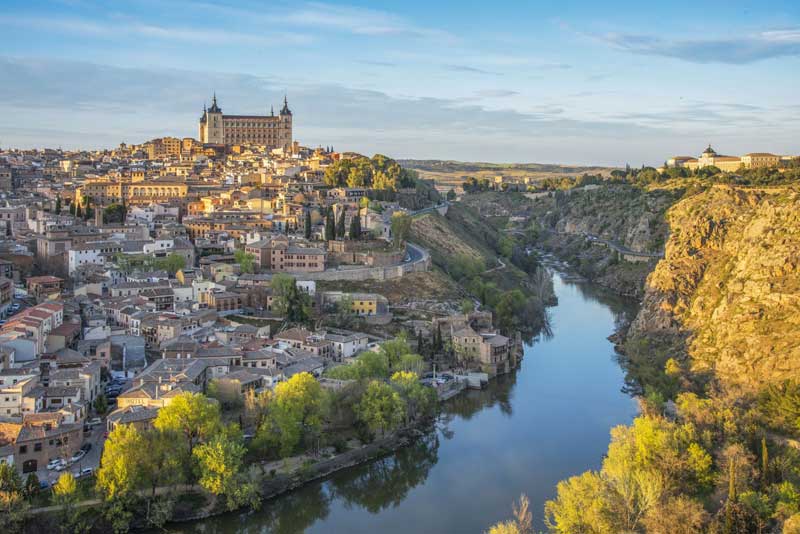
Toledo is one of Spain’s most fascinating cities, known as the “City of Three Cultures.” Walking through its old town is like stepping back in time; its narrow, steep streets are home to synagogues, mosques, and Gothic churches, all within a short distance. The majesty of its Primate Cathedral and the imposing Alcázar dominating the skyline make it a must-see for any history buff.
Besides its architecture, Toledo is famous for its traditional craftsmanship, especially the steel used in its swords and the intricate art of damascening (gold inlay on steel). I recommend crossing the San Martín Bridge at sunset for a panoramic view of the city reflected in the Tagus River, an image that has inspired artists like El Greco for centuries.
Segovia
Ubicación: 40.9429, -4.1088
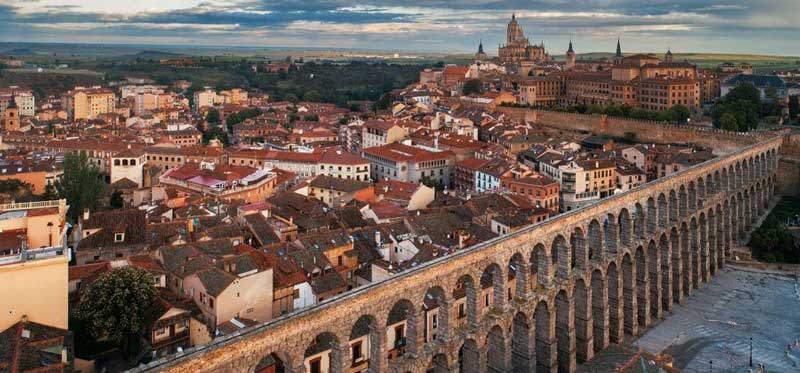
Segovia welcomes you with its astonishing Roman Aqueduct, a 2,000-year-old engineering marvel that stands without the need for cement. The city stretches from this square to the Alcázar, a castle that seems straight out of a fairy tale with its circular towers and its location atop a rocky promontory. Its cathedral, known as the “Lady of Cathedrals,” is the last great example of Gothic architecture in Spain.
The atmosphere in Segovia is welcoming and elegant. Strolling through the Canonjías neighborhood or the old Jewish quarter offers peaceful corners. You can’t leave without trying its most famous dish in one of its traditional inns: roast suckling pig, whose crispy skin and tender meat are the hallmark of the region.
Ávila
Ubicación: 40.6567, -4.7002
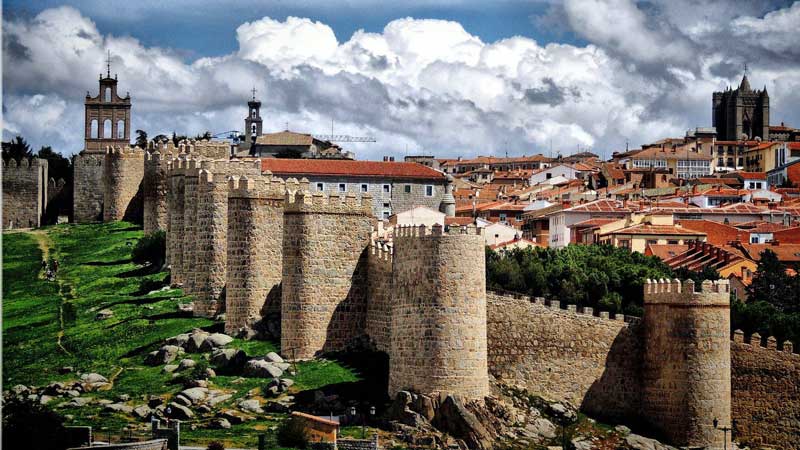
Ávila is a city that exudes mysticism and strength. Its main attraction is its medieval walls, which, with their more than 2 kilometers of perimeter and 88 towers, form the best-preserved walled enclosure in Europe. It is possible to walk along much of its ramparts (the upper section), allowing you to observe both the orderly historic center within and the vastness of the Castilian lands that surround it.
Within its walls, the city retains a sober and spiritual atmosphere, closely linked to the figure of Saint Teresa of Ávila. Its Romanesque churches and fortified cathedral are stone jewels that seem to have stood still for time. To end the visit, it is traditional to buy the famous “Yemas de Santa Teresa” (Saint Teresa’s Egg Yolks), a typical sweet made with egg yolks and sugar that makes the perfect souvenir.
Alcalá de Henares
Ubicación: 40.4819, -3.3635
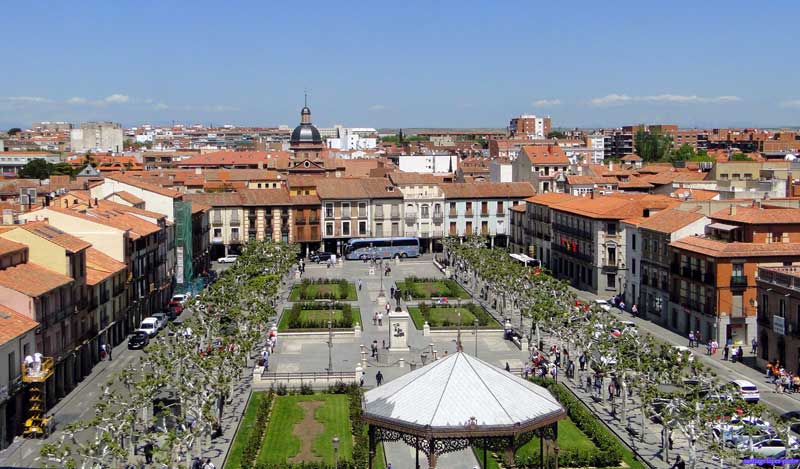
This city is the heart of the Castilian language. Alcalá is the birthplace of Miguel de Cervantes, the author of Don Quixote, and his birthplace is now a museum that recreates life in the 16th century. Its University, founded by Cardinal Cisneros in 1499, is one of the most beautiful in the world; its Plateresque façade and Renaissance courtyards are a testament to the intellectual splendor of the Spanish Golden Age.
Alcalá has a vibrant energy thanks to its university life. Calle Mayor, the longest arcaded street in Spain, is bustling with life, terraces, and shops. It’s also famous for its storks, which nest on almost every tower and bell tower in the city, and for its “free tapa” culture with every drink, making it ideal for a lively, informal lunch.
Aranjuez
Ubicación: 40.0333, -3.6042
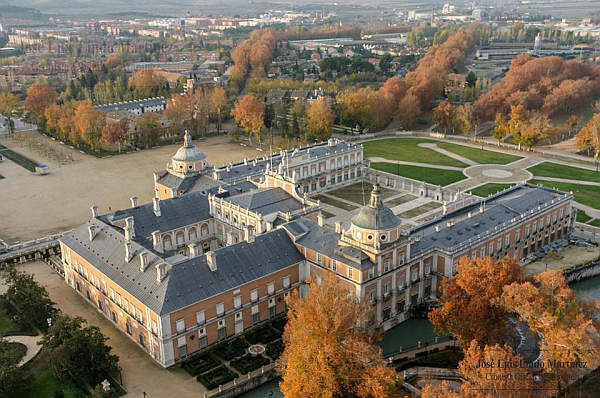
Aranjuez was the favorite spring retreat of the Spanish monarchs, and its elegance is evident. The Royal Palace is a jewel of Baroque and Neoclassical architecture, boasting impressive rooms such as the Porcelain Cabinet. However, what truly sets this place apart are its vast gardens along the banks of the Tagus River, designed for leisurely strolls, music, and the refined enjoyment of nature.
San Lorenzo de El Escorial
Ubicación: 40.5925, -4.1475
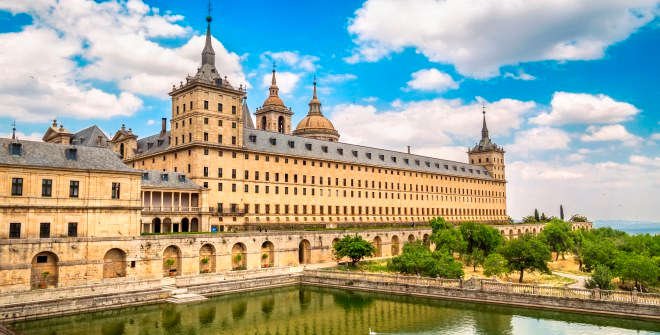
Nestled in the heart of the Sierra de Guadarrama mountains stands the Monastery of El Escorial, a monumental work commissioned by Philip II to reflect the power of his empire. Its austere and geometric architecture (Herrerian style) impresses with its scale. Inside, one finds the Pantheon of Kings, where Spanish monarchs are laid to rest, and a library considered one of the most beautiful and valuable in Europe.
The village of San Lorenzo is a charming place with a stately mountain atmosphere. Its streets are steeped in history and offer a cool refuge during Madrid’s summers. Besides the monastery, the natural surroundings are perfect for hiking, such as the climb to the “Silla de Felipe II” (Philip II’s Chair), a rock formation from which it is said the king oversaw the construction of his grand project.
Cuenca
Ubicación: 40.0704, -2.1374
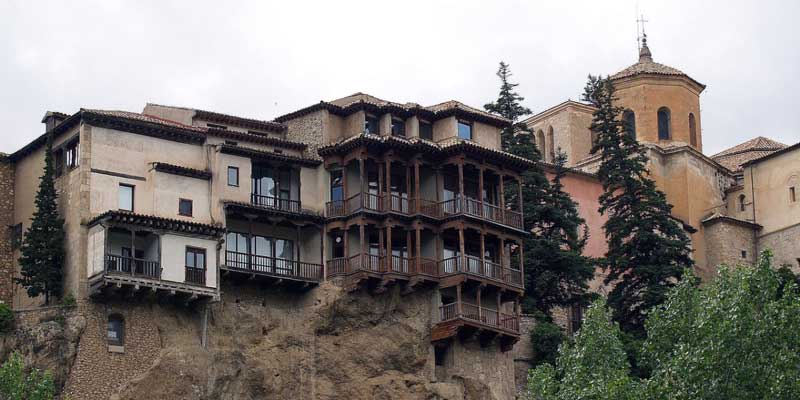
Cuenca is a city that seems to defy the laws of physics. Its old town is built on a rocky spur surrounded by the deep gorges of the Júcar and Huécar rivers. Its famous “Hanging Houses,” with wooden balconies jutting directly over the abyss, are the city’s most iconic image. The contrast between the gray limestone and the green vegetation of the gorge is spectacular.
Crossing the iron bridge of San Pablo, you enter a network of medieval streets that climb towards the Plaza Mayor and its cathedral with its unfinished facade. Cuenca is not only history; it is also a world-class center for modern art, housing museums in historic buildings that create a striking blend of the old and the avant-garde.
Chinchón
Ubicacion: 40.1402, -3.4225
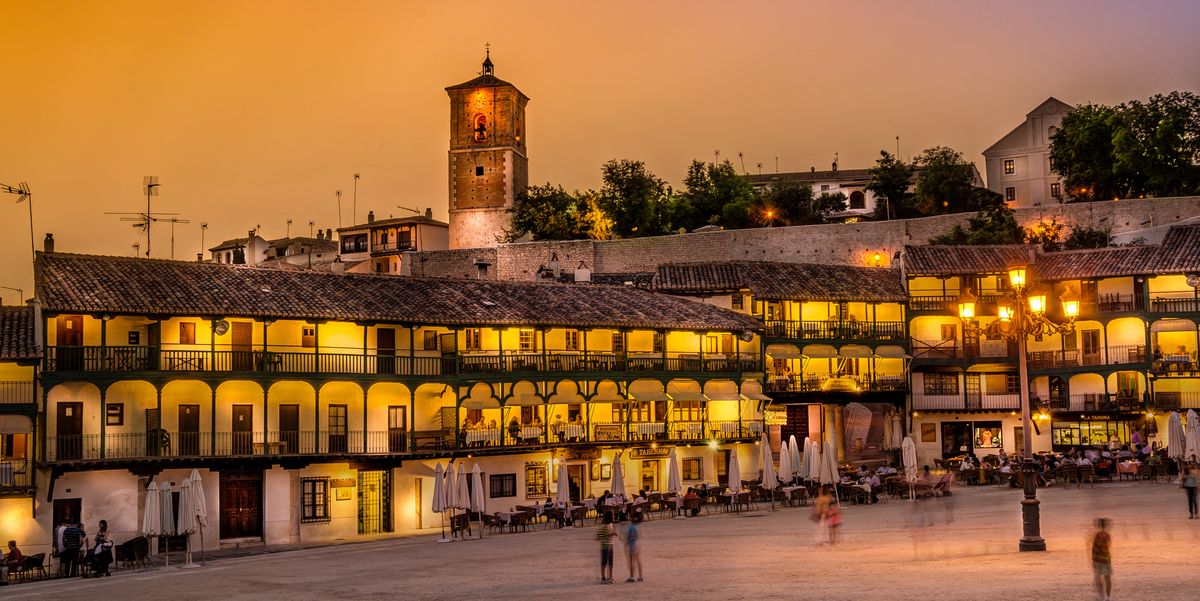
The town is also famous for its gastronomy and local products. Chinchón anise liqueur is known throughout the country, as are its fine garlic. It’s a perfect destination for a short getaway where the main goal is to enjoy a good wood-fired roast and stroll along its steep slopes that lead to the Church of Our Lady of the Assumption, which houses an original painting by Goya.
Manzanares el Real
Ubicación: 40.7271, -3.8614
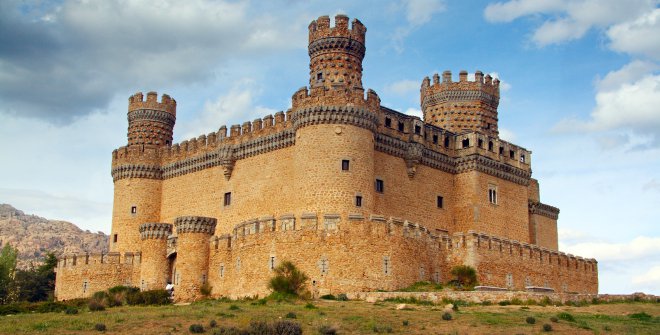
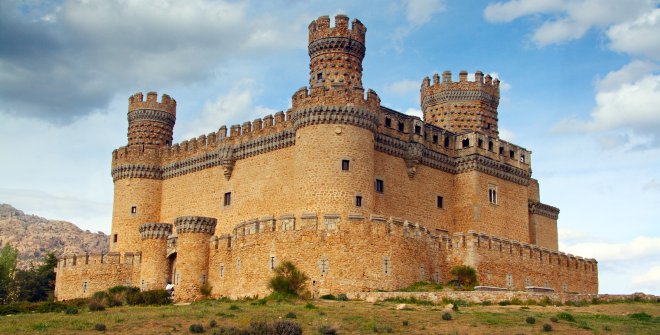
Nestled at the foot of the spectacular Pedriza mountain range in the Sierra de Guadarrama, this village boasts the best-preserved castle in the Community of Madrid. The Mendoza Castle is a medieval fortress that, with its pristine condition and cylindrical towers, resembles a toy. The interior has been transformed into a museum, allowing visitors to imagine what life was like for the nobility in the 15th century as they explore its rooms and arcaded courtyard.
The natural surroundings are another of its great attractions. The Santillana reservoir surrounds the town, offering walking routes with views of the castle and the granite formations of the mountain. It’s a destination that perfectly combines cultural visits with fresh air, making it a favorite spot for Madrid residents to escape the city noise on weekends.
Buitrago del Lozoya
Ubicación: 40.9936, -3.6375
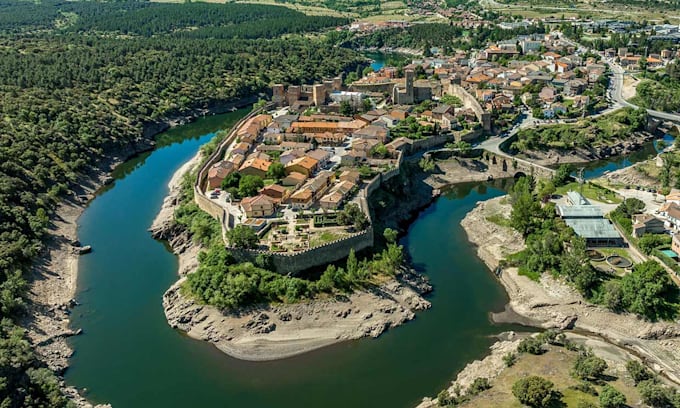
Buitrago is a walled treasure in northern Madrid. It is the only town in the region that has preserved its defensive enclosure intact, almost completely surrounded by the waters of the Lozoya River, which acts as a natural moat. Climbing its walls, of Arab origin, allows you to contemplate the moat and the landscape of the northern mountains in a panorama that has changed very little in the last 500 years.
Within its walled enclosure lie the Castle and the Church of Santa María del Castillo. But what most surprises visitors is the Picasso Museum; a collection of works that the artist gifted to his barber, Eugenio Arias, who was from this town. It’s a fascinating contrast to find modern art of such caliber in the middle of such a peaceful and authentic medieval village.


Leave a Reply