
Even city dwellers need to disconnect from Madrid from time to time. That’s why we’ve selected 10 nearby towns where you can enjoy nature. Some of the most beautiful spots are found among its thirty or so municipalities with fewer than 10,000 inhabitants.
Aranjuez
Address: Plaza de Parejas, s/n, 28300 Aranjuez, Madrid.
Coordinates: 40.03721730796361, -3.6032983593382846
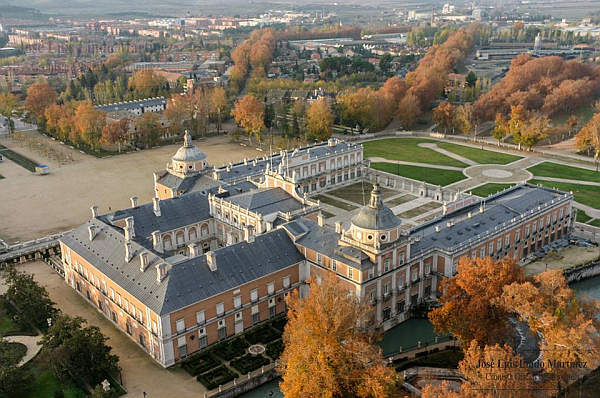
Declared a World Heritage Cultural Landscape by UNESCO, Aranjuez is famous for its imposing Royal Palace and its extensive gardens on the banks of the Tagus River. This Royal Site was the spring residence of the Spanish monarchy for centuries, a fact reflected in its neoclassical grid layout and its lush orchards renowned for their strawberries and asparagus.
In addition to the palace, the Prince’s Garden is a highlight, home to the Royal Farmhouse and the Royal Barge Museum. Strolling along its tree-lined avenues and enjoying its riverside cuisine makes it one of the most comprehensive cultural destinations in the region.
Buitrago del Lozoya
Address: Plaza del Castillo, 1, 28140 Buitrago del Lozoya, Madrid.
Coordinates: 40.989976710823136, -3.638387839070572
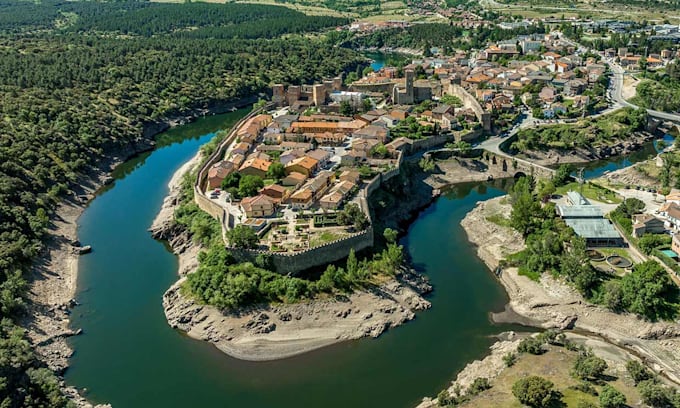
Nestled at the foot of the Sierra de Guadarrama mountains and embraced by the Lozoya River, this town boasts the best-preserved walled enclosure in the entire Community of Madrid. Its historic center, of medieval origin, houses a Mudéjar-style castle, the Church of Santa María del Castillo, and the remarkable Picasso Museum, which holds a collection of works that the artist gifted to his barber, a native of the town.
It’s an ideal destination for lovers of active tourism and history, offering perimeter hiking trails that allow you to photograph the city walls reflected in the reservoir’s waters. During September, its medieval market is one of the most authentic and well-attended in Spain.
Cercedilla
Address: Plaza Mayor, 1, 28470 Cercedilla, Madrid.
Coordinates: 40.73111824621382, -4.070962180832139
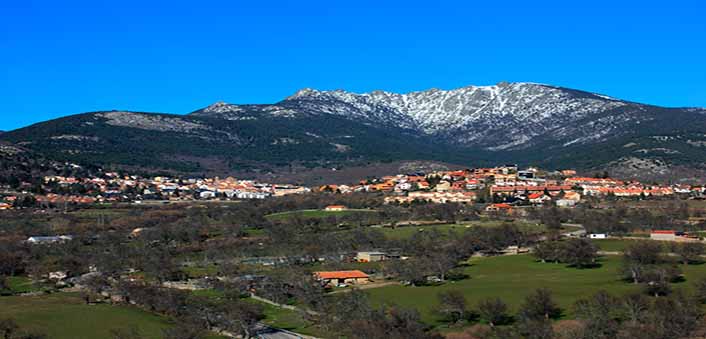
Located in the heart of the Sierra de Guadarrama mountain range, Cercedilla is the quintessential town for mountaineering in the Madrid region. Its history is linked to the Roman mountain passes and the ancient Fuenfría road, which connected the center of the peninsula with Segovia, surrounded by majestic Scots pine forests.
It boasts unique recreational facilities such as the natural pools of Las Berceas and the Nature Train. It is the perfect starting point for ascending to the Navacerrada Pass or hiking the Schmid Trail, offering a welcoming alpine atmosphere year-round.
Chinchón
Address: Plaza Mayor, s/n, 28370 Chinchón, Madrid.
Coordinates: 40.14121386233553, -3.4231463847901247
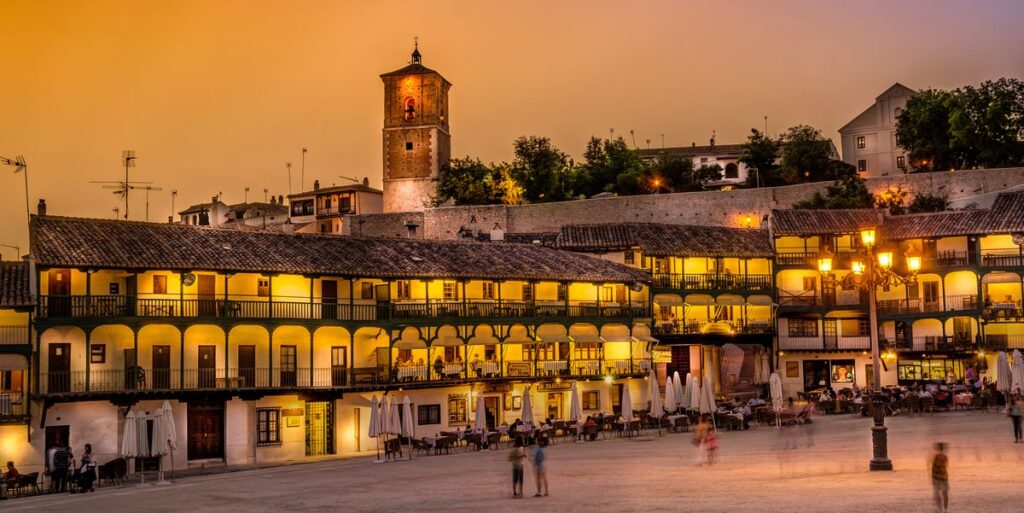
Chinchón is famous for having one of the most picturesque main squares in the world, with its medieval structure, green-painted wooden balconies, and stone arcades. This space, which still serves as an occasional bullring, is the center of the town’s social and gastronomic life, known for its anise liqueur, garlic, and Castilian roasts.
The town’s skyline is dominated by the Church of Our Lady of the Assumption, which houses an original Goya painting, and the remains of the Counts’ Castle. It is one of the most photogenic towns in Spain, having served as a backdrop for numerous Hollywood film productions.
Colmenar de Oreja
Address: Plaza Mayor, 1, 28380 Colmenar de Oreja, Madrid.
Coordinates: 40.10951456061173, -3.3883682328998375
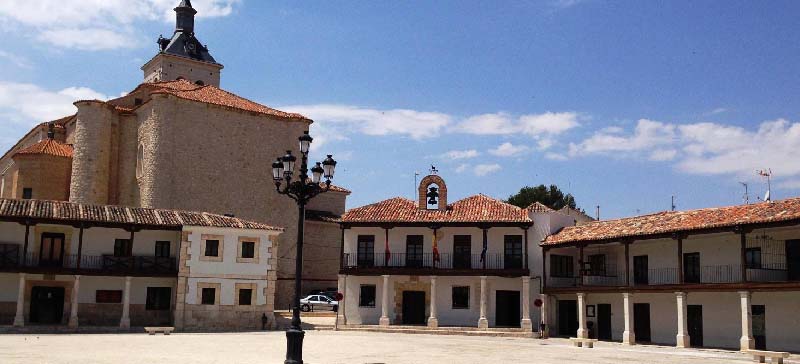
This city, declared a Site of Cultural Interest, is renowned for its harmonious arcaded Plaza Mayor, built between the 18th and 19th centuries. Its architectural heritage reflects the wealth historically brought by its white stone quarries (used in the Palaces of Madrid and Aranjuez) and its thriving wine industry, certified under the D.O. Vinos de Madrid designation.
A visit to the Ulpiano Checa Museum, dedicated to the town’s celebrated painter, is a must, as are its traditional wine cellars carved into the earth. Its cobbled streets and stately atmosphere offer one of the most authentic wine tourism experiences in the region.
Manzanares el Real
Address: Plaza del Pueblo, 1, 28410 Manzanares el Real, Madrid.
Coordinates: 40.736061596034986, -3.8498767814516395
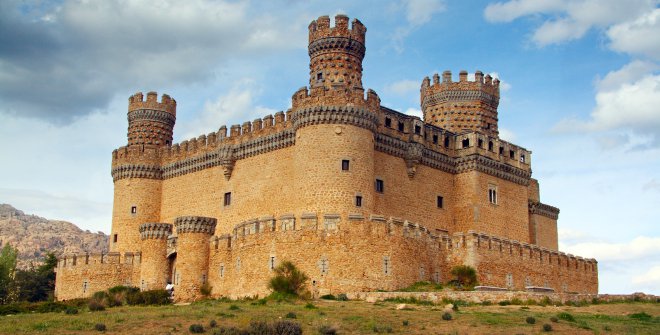
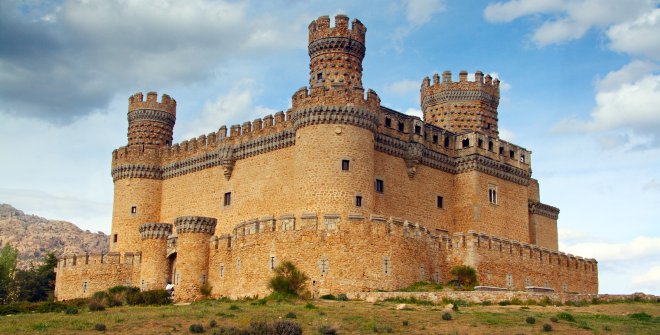
This municipality is home to the Mendoza Castle, the best-preserved castle in the Community of Madrid and a jewel of Isabelline Gothic architecture. Located on the shores of the Santillana Reservoir, the town serves as a natural gateway to La Pedriza, a spectacular granite landscape within the Sierra de Guadarrama National Park.
The combination of historical heritage and unspoiled nature makes it a prime destination for hikers and history buffs. Theatrical tours of the castle are a must for families who want to learn about 15th-century palace life.
Navalcarnero
Address: Plaza de Segovia, 1, 28600 Navalcarnero, Madrid.
Coordinates: 40.29510622686179, -4.007241108521817
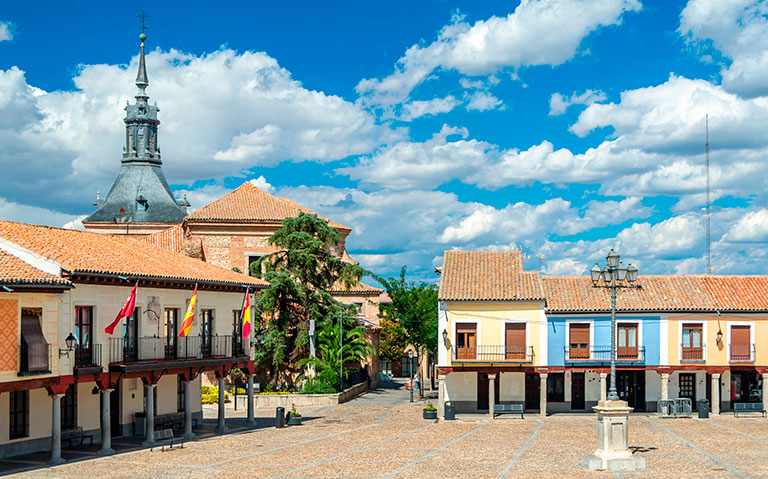
Known as the Royal Town of Navalcarnero, this town southwest of Madrid boasts a rich historical tradition linked to the wedding of King Philip IV to Mariana of Austria. Its heart is the Plaza de Segovia, a three-story arcaded square with wooden balconies that is the epicenter of its renowned wine and barbecue culture.
A visit to the Interpretation Centre is essential to understanding its agricultural past, and its numerous themed squares are a must. Its cuisine, especially the traditional harvester’s stew and its red wines, attracts diners from all over the capital every weekend.
Patones (Patones de Arriba)
Address: Plaza de la Constitución, s/n, 28189 Patones de Arriba, Madrid.
Coordinates: 40.86601878257358, -3.4913062855044723
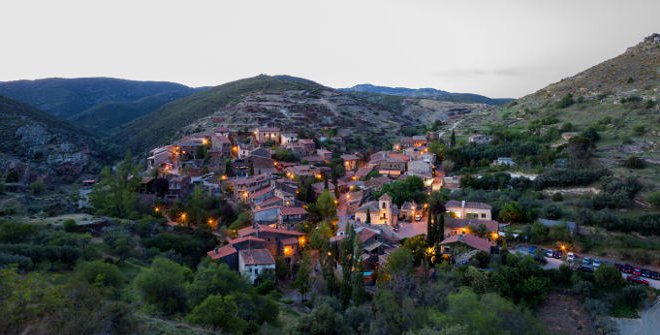
Patones de Arriba is the finest example of black architecture in Madrid, with its houses built entirely of slate. This small village, which remained almost isolated for centuries (even having its own “King of Patones”), is today an open-air museum of cobbled streets and charmingly rustic corners.
⚠️ Aviso: Access by car to the upper village is restricted to residents. It is recommended to park in Patones de Abajo and walk up the ecological trail (20 minutes) or arrive very early to find a space in the small park-and-ride lot.
San Lorenzo de El Escorial
Address: Avenida de Juan de Borbón y Battenberg, s/n, 28200 San Lorenzo de El Escorial, Madrid.
Coordinates: 40.58864520656339, -4.148799235627524
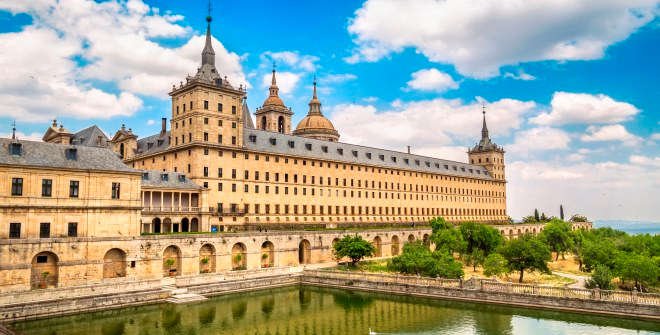
Home to the imposing Monastery of El Escorial, a masterpiece of the Herrerian style and the final resting place of the kings of Spain, this stately town, nestled on the slopes of Mount Abantos, combines the majesty of its royal heritage with an urban elegance of cobbled streets and historic 18th-century buildings.
In addition to the monastery, the town offers gems like the Casita del Príncipe (Prince’s Cottage) and a vibrant cultural scene with its theater and auditorium. The natural surroundings, including the Bosque de la Herrería (Herrería Forest), make it the most visited tourist destination in the Sierra de Madrid.
Torrelaguna
Address: Plaza Mayor, 1, 28180 Torrelaguna, Madrid.
Coordinates: 40.826808853610906, -3.538439799279469
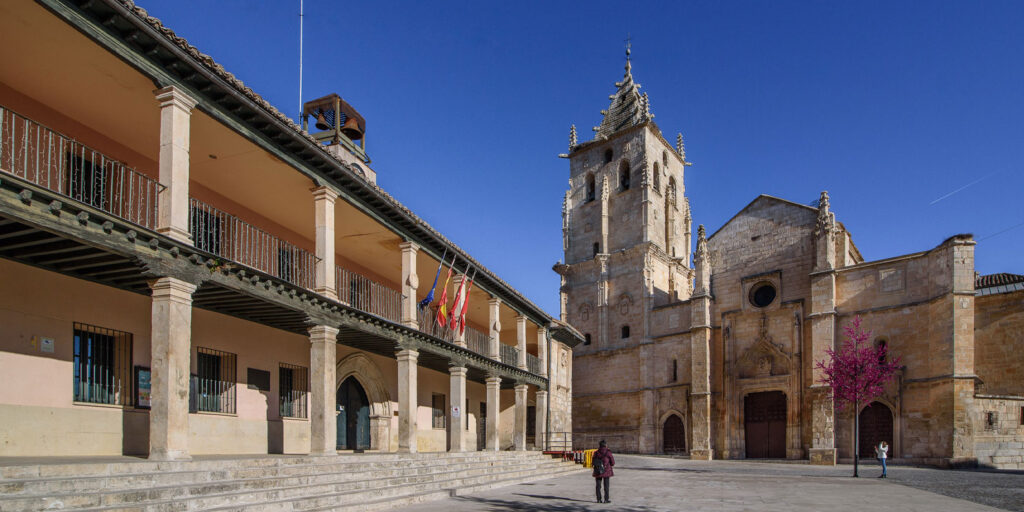
Torrelaguna is a historic town, birthplace of Cardinal Cisneros and residence of Saint Mary of the Head and Saint Isidore the Farmer. Its old town is notable for the imposing Church of La Magdalena, a Gothic temple of cathedral-like dimensions that dominates a main square surrounded by palatial houses with heraldic shields.
The town retains part of its medieval walls and Renaissance buildings that attest to its historical importance. It is a place of peace and solid architecture, ideal for those seeking a Castilian Madrid, authentic and less crowded than other tourist centers.

Leave a Reply